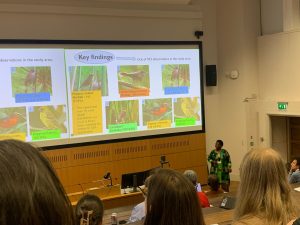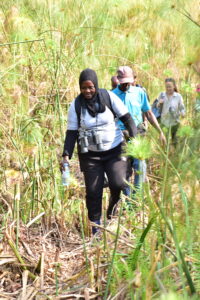
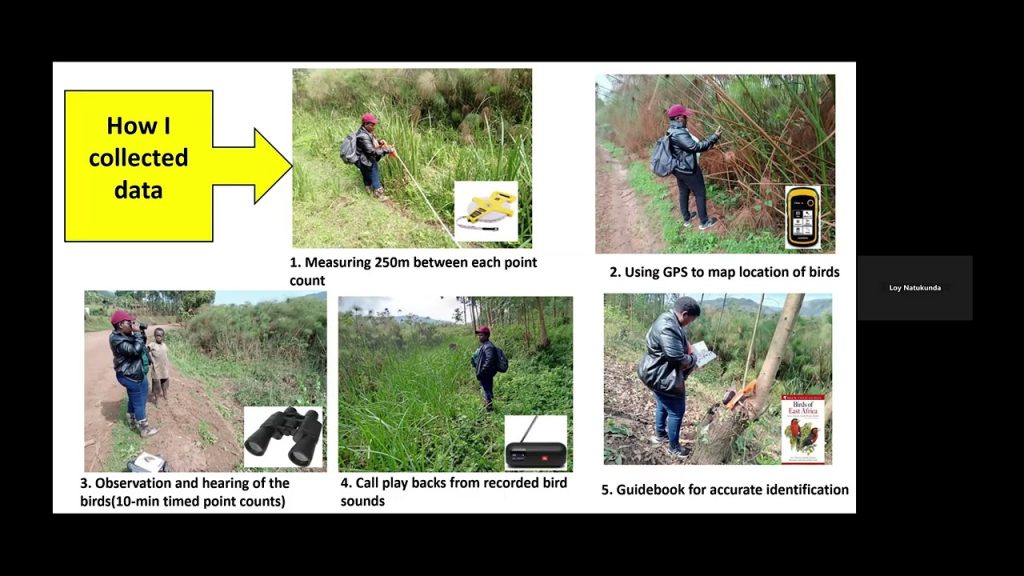
On 18 September 2025, Loy Natukunda participated in the Nigerian Bird Atlas Project (NiBAP) webinar where she presented preliminary findings regarding JRS’s biodiversity SEBU project. It was part of their monthly webinar series and was scheduled for 3:00 PM WAT (West African Time). Loy’s presentation is an important component of the SEBU Project’s knowledge dissemination effort. The presentation was entitled The Papyrus Guardians: Saving a Wetland with Rare Birds. This webinar provided a platform for regional learning and collaboration between bird researchers, conservation practitioners, and citizen scientists from Nigeria and across West Africa.
Her presentation focused on the findings she obtained from the Rushebeya-Kanyabaha Wetland. To save the ecosystem in south western Uganda, Loy stressed the importance of science, strategy, and community action efforts. In order to accomplish this, it is necessary to establish a community of guardians who are informed of the importance of protecting these valuable ecological resources. A number of conservation professionals from across borders attended the webinar. In order to achieve stronger wetland conservation collaboration, the SEBU Project focuses on knowledge sharing and community engagement. Creating a network of informed guardians could lead to the development of more effective conservation strategies that can be applied to other regions facing similar ecological challenges. Furthermore, the success of the project in Kigezi could serve as a model for integrating scientific research with community action to protect vital ecosystems worldwide.
She highlighted the need to conserve these wetlands that serve as a source of livelihood for many in this very informative presentation about diversity. Birdwatching is one of Uganda’s largest foreign exchange earners, generating millions of dollars annually. Loy emphasized the importance of wetland ecosystem services. These habitats are important for many species of birds, which provide pest control, seed dispersal, and pollination services. It is also common for many of these high altitude birds to be associated with the culture of the South Western Ugandan communities, which are situated near the wetlands. These birds play an important role in the local traditions and symbolism of the communities. It is without a doubt beneficial to the environment and the wellbeing of humans to conserve papyrus birds.
The presentation presented key findings from research conducted by SEBU in Rushebeya–Kanyabaha Wetland, highlighting the critical importance of papyrus wetlands for a number of rare and globally significant bird species. As a result of the results of the study, it was found that the wetland supports more than 1% of the global population of the Papyrus Yellow Warbler, thus meeting the criteria for a Key Biodiversity Area (KBA). In addition, the study revealed that papyrus-dependent birds are strongly attracted to mature, healthy papyrus vegetation as opposed to degraded and chemically altered habitats.
To protect these vital bird populations, conservation efforts are focused on restoring and maintaining healthy papyrus vegetation in the wetlands. Other initiatives include reducing pollution and promoting sustainable land-use practices in local communities. Additionally, community education programs such as the mass media and stakeholder-focused engagements that raise awareness about the ecological and cultural significance of papyrus birds encourage local stewardship of these endemic ecosystems.
Beyond ecological findings, the presentation emphasized a strategy where people living in these communities would be the true guardians of wetlands. While rare birds provide compelling scientific evidence for conservation, long-term protection depends on community stewardship, informed policy, and sustained monitoring. During the session Loy highlighted the value of citizen science approaches, including bird atlases and community-based monitoring, as practical tools for maintaining long-term biodiversity data and local ownership.

Stakeholder engagement through expert talks and webinars will enhance knowledge exchange between East and West Africa. Furthermore, it will enhance the visibility of JRS biodiversity-funded SEBU project research efforts outside of Uganda, testing vital approaches to safeguard wetland eco-systems, collecting data, and testing strategies for coexistence. The presentation also highlighted the impending risk if the exploitation of the Papyrus wetlands is not checked, since they are disappearing owing to farming, herbicides, and human settlements. One of the factors contributing to this loss of wetlands is the limited scientific evidence to prove their global significance. A key objective of the research was to generate baseline data to support the designation of these research area wetlands in western Uganda as a Key Biodiversity Area (KBA).